GINGIVAL INFLAMMATION SYMPTOMS
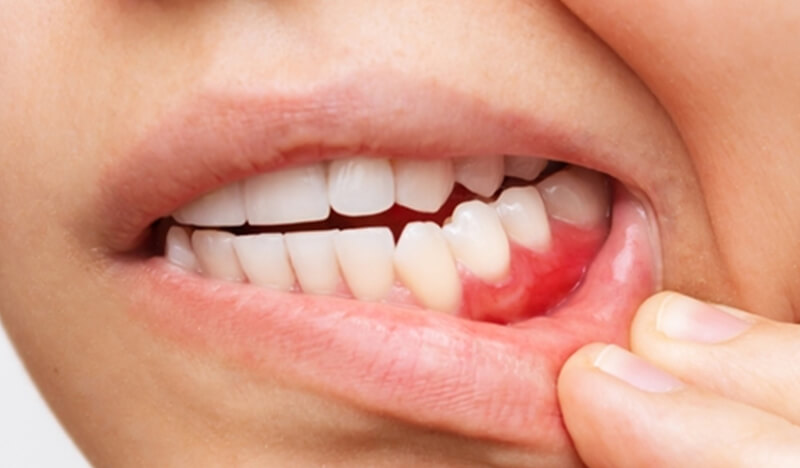
Symptoms of early-stage gum disease include swelling, redness, and tenderness of the gums. You may notice some bleeding after brushing or flossing. Your gums may also hurt if you chew something too hard or crunchy. Many patients with gingivitis have bad breath that does not go away with brushing, flossing, and mouthwash.
PERIODONTITIS SYMPTOMS
As gum disease worsens, you may begin to notice pockets forming between your teeth and gums. Your teeth may start to feel like they’re loose in their sockets. Your teeth may appear elongated as the bleeding worsens and as your gums recede, exposing more of the tooth roots. Most people with periodontitis find that their teeth become very sensitive to heat, cold, and pressure. The reason for this is that the nerves in the tooth roots are closer to the surface and react strongly to stimuli when they are exposed by gingival recession.
CAUSES OF GUM DISEASE
are hundreds of types of bacteria that live in your mouth, and most are harmless or even beneficial. However, a few can cause gum disease if it becomes too common. Treponema denticola and Porphyromonas gingivalis are the main culprits in most cases of gum disease. If you brush and floss well and regularly, you can remove these bacteria from your teeth and gums before they cause a problem. However, when you neglect your dental hygiene, these bacteria multiply and infect your gum tissue and cause symptoms of gum disease. When bacteria travels between your gums and teeth, it becomes difficult to remove.
Anyone can develop gum disease. It occurs similarly in young children, adolescents, young adults, and older adults. However, some people are at higher risk of gum disease than others. Here are some of the most common risk factors for gum disease.
- Smoking: Smoking dries out the mouth, which allows oral bacteria to multiply, increasing the risk of gum disease.
- Certain Medications: Antidepressants, steroids, and pain relievers sometimes reduce saliva production, which increases the risk of gum disease.
- Diabetes: This disease reduces the body’s ability to fight infections such as gum disease.
- Hormonal Changes: Women are more likely to develop gum disease after menopause.
- Advanced Age: Gum disease becomes more common as you age. This may be due to an increased risk of dry mouth as we age, hormonal changes, or a lack of proper oral hygiene.
GUM DISEASE TREATMENT PROCESS
If you develop gum disease, it is crucial to seek treatment promptly. Untreated gum diseases can cause tooth loss. Researchers have also discovered a link between gum disease and heart disease. It is thought that the bacteria that cause gum disease can enter the bloodstream and damage the heart and blood vessels.